
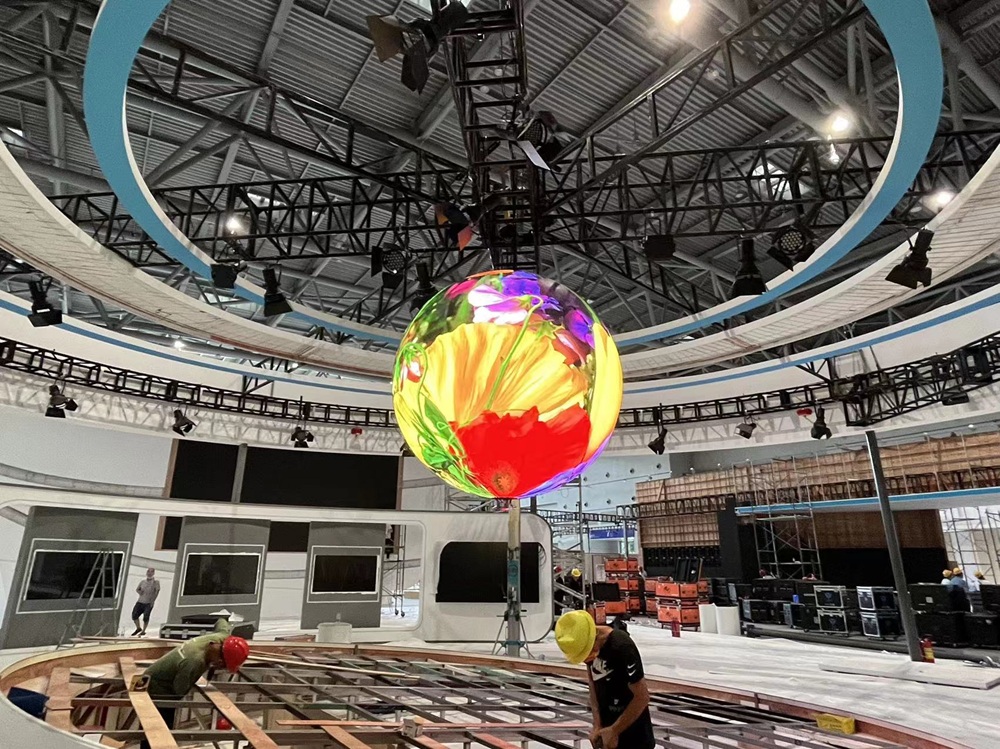
An LED spherical display is a creative round LED screen. Unlike flat panels, it wraps visuals around a 3D sphere, capturing attention from every angle. But since the size ranges from 1 meter to 10 meters in diameter, choosing the right one can feel overwhelming. Bigger isn’t always better—your best option depends on the installation space, viewing distance, and what content you want to show. In this guide, we’ll explain the differences between various sizes and how to choose the most suitable spherical screen.
Before diving into sizes, let’s talk about why these screens are so popular. They are built using hundreds of small LED modules assembled into a smooth sphere, creating a 360° display visible from all directions.
Imagine a giant glowing ball that can play videos, run advertisements, or simulate planets—and it looks seamless no matter where you stand.
Key features: high brightness that works under sunlight or indoor lighting, crisp resolution for both near and far viewing, vivid colors, and a wide viewing angle—so even if you stand directly behind the sphere, you won’t miss the visuals.
How LED Spherical Screens Create Immersive Visuals
Common Sizes: 1m to 10m
The most common diameters on the market are 1m, 1.5m, 2m, 3m, 5m, 6m, and 10m. Each size has its own advantages, mainly affecting four aspects: display quality, coverage, installation requirements, and cost.
Display Quality
Here’s the secret: size + pixel pitch = clarity.
1m to 2m small spheres are meant for close viewing.
Think of a 1m sphere in a hotel lobby—people walk right up to it. For this size, you’ll need a small pixel pitch such as P2.5 or P3. From a distance of just 90 cm (3 feet), gaps between pixels become obvious. With P2.5, visuals remain smooth and detailed even up close.
5m to 10m large spheres work well for long-distance viewing—like a 10m sphere in a stadium. Larger pixel pitches like P6 or P8 are suitable. From 15 meters (50 feet) away, pixel spacing disappears and the screen still looks clear.
Larger spheres have a much larger display surface, allowing immersive visuals. A 10m sphere showing a rotating Earth feels like you’re looking at a real planet, while a 1m sphere feels more like a model.
Size also affects the “wow factor.” A 20m sphere looks dramatically larger than a 10m one and creates a much more immersive environment—if your space can handle it.
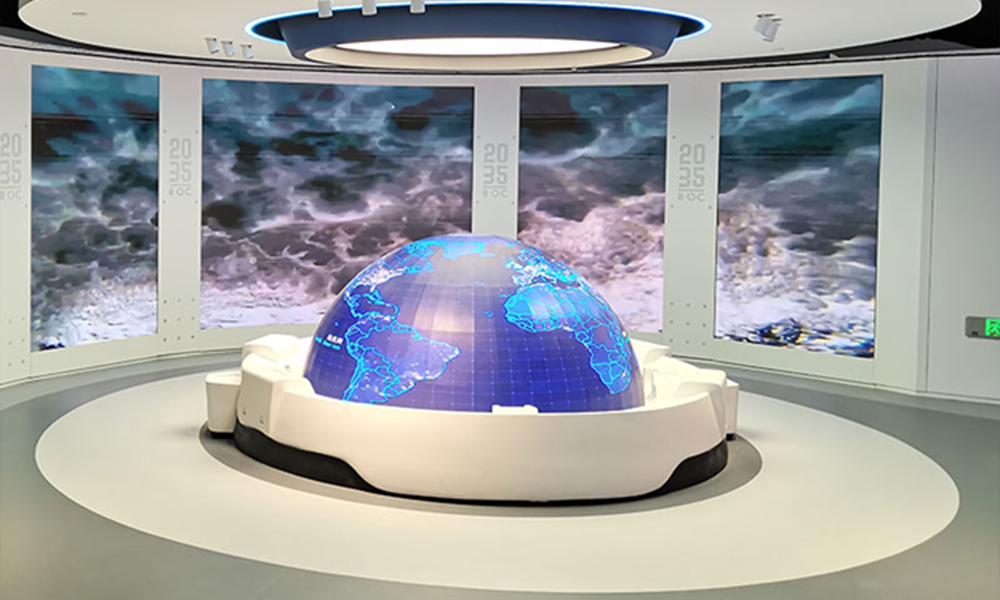
Ideal Pixel Pitch for LED Spherical Screens
Coverage Area
The size of the sphere determines how much physical and visual space it can cover.
Surface area formula:
S = πD², where D is the diameter.
A 1m sphere → 3.14 m² of display area
A 10m sphere → 314 m²
That’s 100 times more display area.
What this means:
-
A 1m sphere in a boutique store can attract attention, but won’t draw crowds.
-
A 5m sphere in a plaza will attract people from across the street.
-
A 10m sphere in a stadium can be seen by thousands—perfect for showing scores and advertisements.
1–2m spheres: best for small indoor spaces
5m+ spheres: perfect for large public spaces
Installation
Installing a spherical LED display is not like hanging a picture—size heavily impacts installation difficulty.
1m to 2m spheres
Lightweight and compact. They can be suspended using strong cables or simple brackets. A 1.5m sphere can be installed in under 4 hours with just two workers.
6m to 10m spheres
A completely different level.
A 10m sphere weighs several tons. You must evaluate the load-bearing capacity of the ceiling or floor. Outdoor models require special steel structures to withstand wind and weather.
For example, installing a 6m outdoor sphere requires a crane, structural engineers, and several days of alignment work.
Pro tip:
For spheres over 3m, always hire professionals. They will handle structural safety, lifting, and module calibration.
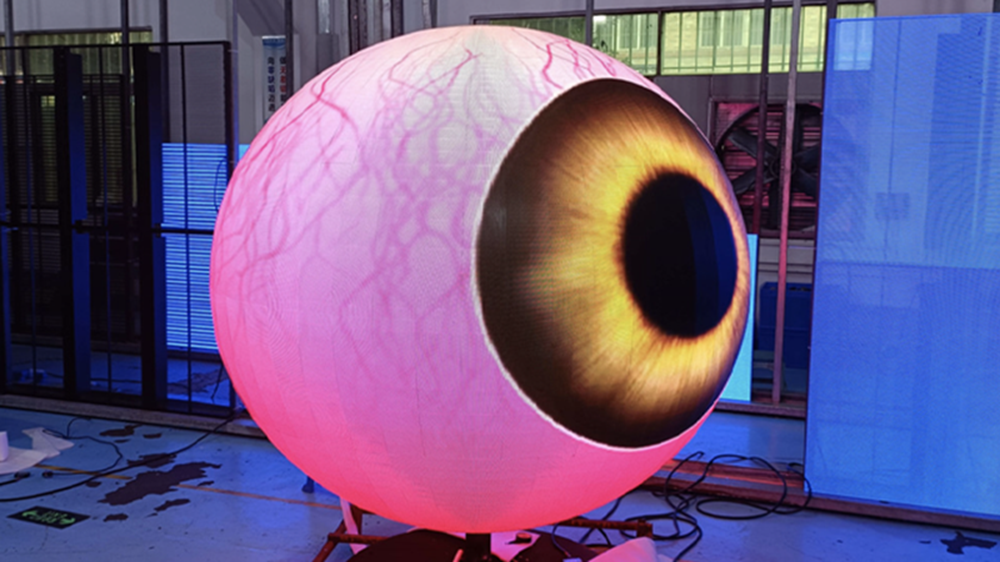
How to Choose: 3 Key Factors
Now that you understand the differences, here are 4 questions to help you choose the right size:
1. Where will it be installed?
Small spaces
Mall kiosks, hotel lobbies, small galleries
→ Choose 1m–2m
Medium-sized venues
Exhibition halls, plaza corners, concert stages
→ Choose 3m–5m
Large open spaces
Stadiums, large parks, city squares
→ Choose 5m–10m
2. Viewing distance
Close range (3–5m):
Retail store displays → 1m–2m, P2.5–P3
Mid-range (6–20m):
Museum spheres → 3m–5m, P4–P6
Long range (20m+):
Stadium spheres → 6m+, P6–P10
3. Content type
Detailed visuals:
Product images, text-heavy ads → 1m–2m, small pixel pitch
Immersive visuals:
Dynamic videos, large ads → 5m–10m, larger surface area
Conclusion
The ideal LED spherical screen size depends not on choosing the biggest or the smallest, but on matching the space, audience, and content requirements. A 1m sphere in a café can be just as impressive as a 10m sphere in a stadium—if used correctly.
If you’re unsure where to start, measure your space, estimate viewing distance, and define your content goals. For professional advice, consult a reliable LED display manufacturer like Hot Electronics. If you need a spherical LED solution, feel free to contact us anytime.
Post time: Dec-09-2025