
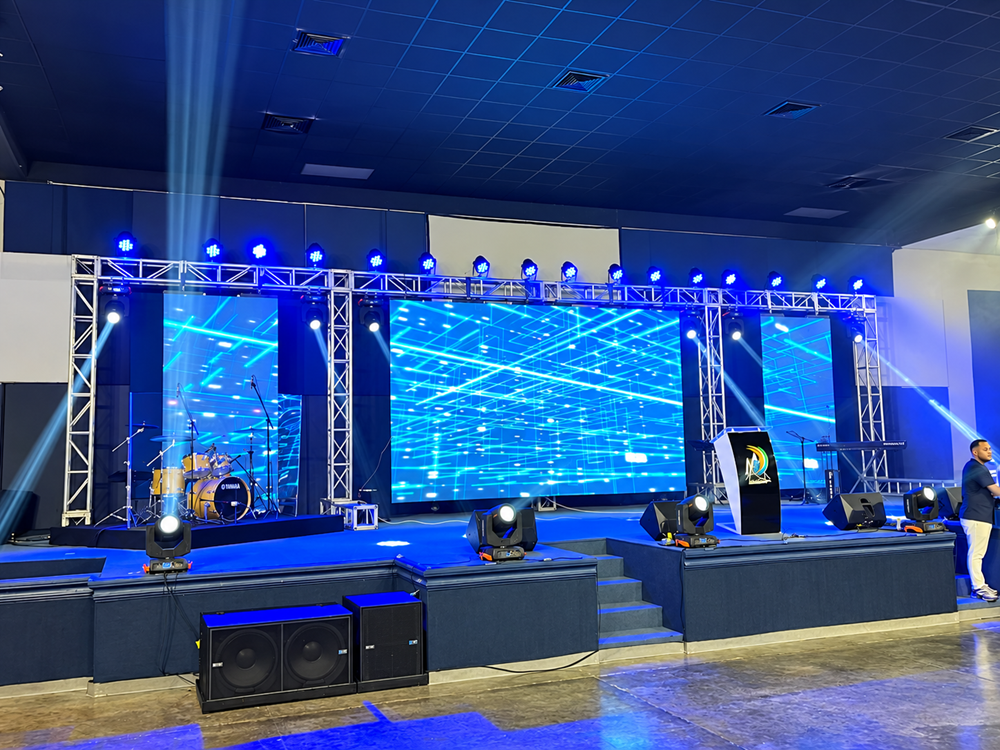
With their outstanding visual performance and versatile applications, LED displays have become an essential part of modern information communication and advertising. However, choosing the right installation method is crucial to maximizing their performance. Different installation methods affect not only the display’s appearance and functionality but also its maintenance accessibility and service life.
Taking site conditions and customer requirements into account, this article outlines six common LED display installation methods to help you find the right solution for your project.
1. Recessed Wall Installation
Recessed wall installation is an aesthetically pleasing option that integrates an LED display seamlessly into the surrounding wall. By creating an opening in the wall, the display can be installed flush with the wall surface, creating a clean and integrated appearance.
This method is ideal for locations where aesthetics and space efficiency are priorities, such as retail stores, conference rooms, and control centers. It is particularly suitable for fine-pitch LED displays that need to blend naturally into their surroundings.
However, heat dissipation and maintenance access must be carefully considered. Maintenance may require access through the wall or from the front, depending on the installation design. Fine-pitch LED displays installed this way typically support front maintenance, with LED modules secured to the cabinet structure using strong magnetic attachments.
2. Hanging Installation
Hanging installation is a practical and space-saving solution, particularly for small and lightweight LED displays. Whether used in exhibition halls, conference rooms, or on stage, this method suspends the display above the ground, creating an eye-catching visual focal point.
With adjustable installation heights and optional decorative elements, hanging installation offers flexibility in both appearance and functionality, making it suitable for a wide range of indoor applications.
3. Wall-Mounted Installation
Wall-mounted installation is a straightforward and efficient method that secures an LED display directly to a load-bearing wall. It saves floor space and provides a clean, professional appearance, making it ideal for offices, classrooms, and small retail stores.
For fine-pitch LED displays, front maintenance is often sufficient, allowing technicians to access modules and components from the front. Larger-pitch LED displays typically require rear maintenance access to facilitate routine inspections, repairs, and component replacement.
4. Floor-Standing Installation
Floor-standing installation offers excellent flexibility, with both fixed and mobile options available to meet different application requirements. Fixed installations are suitable for permanent advertising displays, while mobile installations with casters provide convenience for exhibitions, temporary events, and other scenarios requiring frequent relocation.
This method is particularly popular for outdoor advertising displays and large-scale rental events, where stability and mobility are important considerations. For this reason, rental LED screens commonly use floor-standing or ground-supported installation structures.
5. Wall-Mounted Installation with a Swing Arm
Wall-mounted installation with a swing arm provides flexible access for maintenance and can improve ventilation behind the display. Using a movable or fixed swing-arm bracket, the LED display can be extended, repositioned, or rotated as required.
This method is especially useful for concert venues, broadcast studios, and outdoor locations with limited rear access. Its adjustable structure makes maintenance more convenient while offering greater flexibility in installation and display positioning.
6. Pole-Mounted Installation
Pole-mounted installation is widely used for outdoor LED displays. Supported by a sturdy single-pole or dual-pole structure, this method accommodates LED displays of various sizes and provides excellent visibility from a distance.
Typical applications include roadside advertising billboards, stadium scoreboards, and large displays in urban squares. By elevating the screen above ground level, pole-mounted installation improves visibility and helps maximize advertising exposure, making it an ideal solution for outdoor LED displays.
Conclusion
Choosing the right LED display installation method directly affects visual performance, maintenance efficiency, and service life. Key factors to consider include the display’s weight and dimensions, site conditions, available installation space, and intended application.
From recessed wall installation to pole-mounted structures, each method offers distinct advantages for different environments and requirements. By selecting the appropriate installation solution, you can maximize your LED display’s performance, reliability, and long-term value.
Post time: Oct-15-2026