
Depending on the installation environment, LED displays can be classified into three categories: indoor LED displays, semi-outdoor LED displays, and outdoor LED displays.
Semi-outdoor LED displays are installed in transitional areas between indoor and outdoor environments. They offer relatively high brightness and can be used outdoors without direct sunlight. They provide a certain level of protection against environmental conditions and are typically installed under eaves or behind windows.
Outdoor LED displays generally range in size from a few square meters to tens or even hundreds of square meters. They have a relatively low pixel density, typically between 1,000 and 10,000 pixels per square meter, and a brightness level of 3,500–10,000 cd/m², depending on the application and viewing direction. They can operate under direct sunlight and remain visible from distances of tens of meters. Their cabinets are designed to withstand wind, rain, and lightning-related environmental risks.
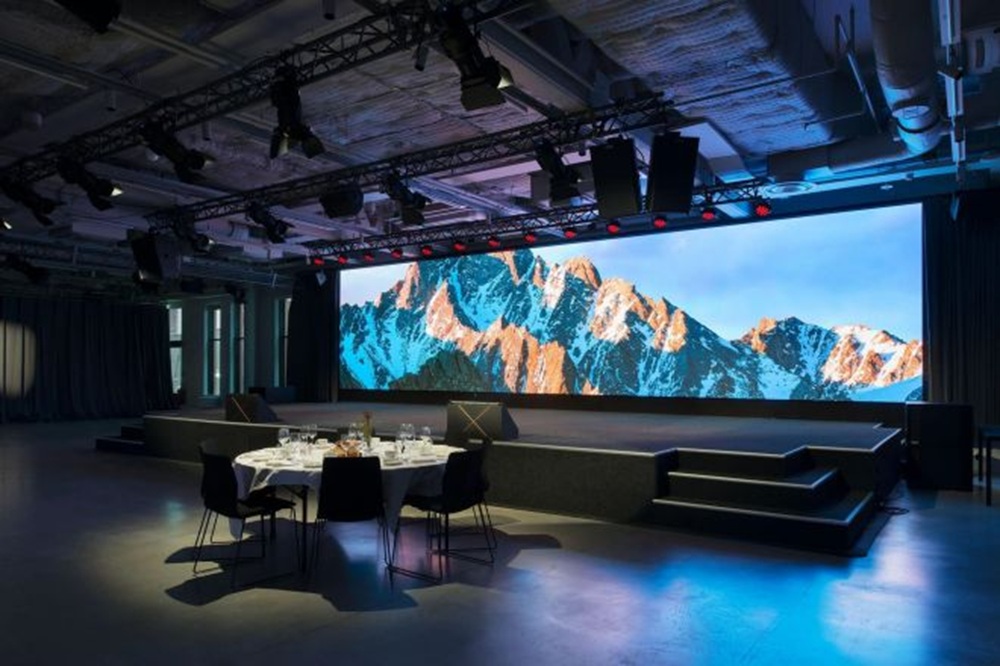
What Is an Indoor LED Display?
Indoor LED displays are widely used by businesses as a promotional tool and as an upgrade to traditional advertising methods. They present corporate messages, promotional content, images, and videos directly within indoor spaces, making communication more engaging and effective.
High Contrast: Full-color indoor LED displays offer high contrast ratios, producing vivid and realistic images and videos.
Wide Viewing Angles: Indoor full-color LED displays provide wide viewing angles, allowing audiences to enjoy consistent image quality and color reproduction from different positions.
Low Power Consumption: Indoor LED displays generally consume less power than many other display solutions, helping reduce energy costs.
High Resolution: Indoor LED displays typically feature pixel pitches ranging from P1.0 to P2.5, making them suitable for high-resolution applications, including 4K and 8K displays, depending on the screen size and configuration.
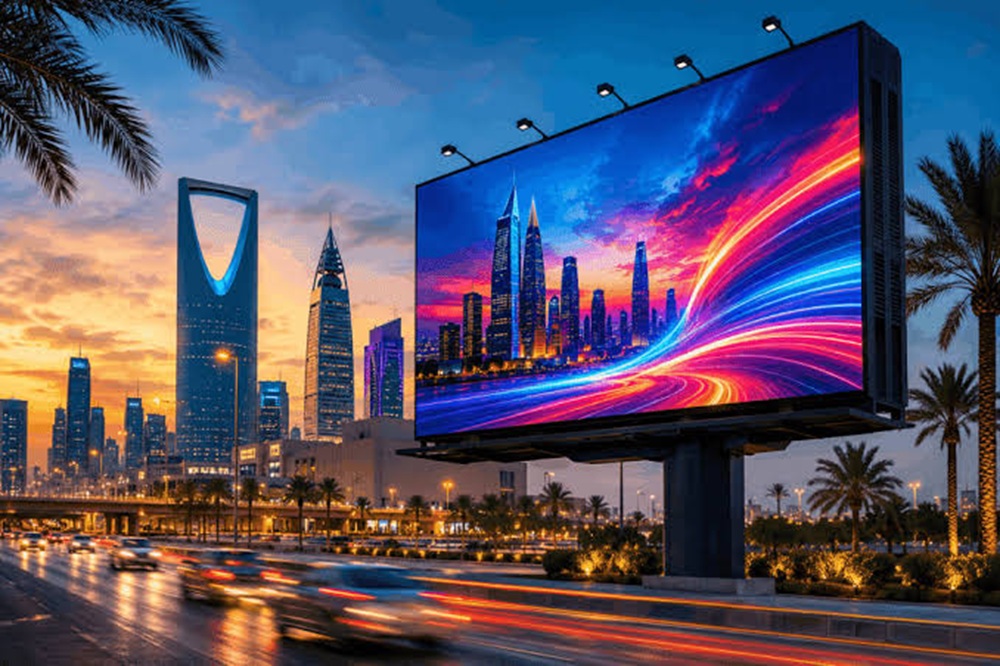
What Is an Outdoor LED Display?
An outdoor LED display is a digital advertising solution designed for outdoor environments, capable of displaying dynamic visual content, including images and videos. Some systems can also support audio playback.
High Brightness: Standard outdoor LED displays typically offer brightness levels of 5,500 cd/m² or higher. Depending on customer requirements, brightness can exceed 10,000 cd/m². This ensures that content remains clearly visible even in bright sunlight.
High Protection Rating: Outdoor LED displays must withstand rain, wind, sunlight, dust, and other environmental challenges. They require effective waterproofing and strong UV resistance. Depending on the installation environment, an IP65-rated or higher enclosure is generally recommended to protect against dust and water ingress.
Key Differences Between Indoor and Outdoor LED Displays
1. Visibility and Viewing Angle
Indoor LED displays commonly use SMD (Surface-Mounted Device) technology and can offer horizontal and vertical viewing angles of approximately 160 degrees. Outdoor LED displays are also available with SMD technology, with typical viewing angles of around 160° horizontally and 140° vertically, depending on the product design.
In general, both indoor and outdoor LED displays can provide wide viewing angles, but actual performance depends on the LED package, module design, and display configuration.
2. Brightness
Indoor LED displays typically have lower brightness levels, often around 800 nits or less, because they operate in controlled lighting conditions.
Outdoor LED displays require significantly higher brightness, generally 5,000 nits or more, to maintain visibility under direct sunlight.
3. Protection
Indoor LED displays are installed in relatively controlled environments and generally do not require extensive waterproofing.
Outdoor LED displays must withstand harsh weather conditions. Their cabinets and modules need appropriate protection against water, dust, vibration, and other environmental factors. An IP65-rated enclosure is commonly used for outdoor applications, depending on the installation requirements.
4. Power Consumption
Outdoor LED displays generally consume more power than indoor displays because they require higher brightness levels.
Typical power consumption varies by product and operating conditions. For example, indoor LED displays may have an average power consumption of approximately 110–350 W/m², while outdoor LED displays may range from 300–900 W/m². Actual consumption depends on brightness settings, content, pixel pitch, and display technology.
5. Viewing Distance
Outdoor LED displays are generally designed for longer viewing distances, making them suitable for billboards, building facades, stadiums, and roadside advertising.
Indoor LED displays are typically viewed from shorter distances, making fine pixel pitches and high resolution important for conference rooms, retail spaces, exhibition halls, and control rooms.
6. Durability
Outdoor LED displays are designed to operate under more demanding environmental conditions than indoor displays. Their construction often incorporates weather-resistant materials, protective coatings, and robust cabinet designs to improve resistance to moisture, UV exposure, temperature fluctuations, and corrosion.
Indoor LED displays operate in more controlled environments and therefore generally require less extensive environmental protection.
In summary, indoor and outdoor LED displays differ significantly in their operating environments, brightness, protection ratings, power consumption, viewing distances, and durability. Buyers should evaluate their application requirements and installation conditions before selecting a suitable display.
How to Choose the Right LED Video Wall for Your Needs
Choosing the right LED video wall requires careful consideration of several key factors.
First, determine the installation environment. Decide whether you need an indoor or outdoor LED display. Indoor displays generally do not require waterproofing, while outdoor displays need appropriate protection against water, dust, sunlight, and other environmental conditions.
Second, determine the screen dimensions. Measure the required width and height of the LED display to establish the appropriate screen size and configuration.
Third, calculate the viewing distance. Identify the minimum and maximum distances from which viewers will watch the display. This helps determine the appropriate pixel pitch and resolution for clear, comfortable viewing.
Conclusion
When selecting an LED display, quality and price should be considered together. Although many buyers initially focus on finding the lowest price, cost alone is not a reliable indicator of long-term value.
For electronic products such as LED displays, stable performance, long service life, and excellent image quality are essential considerations. Buyers should carefully evaluate the manufacturer’s product specifications, production capacity, quality control standards, technical support, and pricing before making a final decision.
Choosing the right LED display involves balancing performance, durability, installation requirements, and budget to achieve the best long-term value for your project.
Post time: Oct-27-2026