
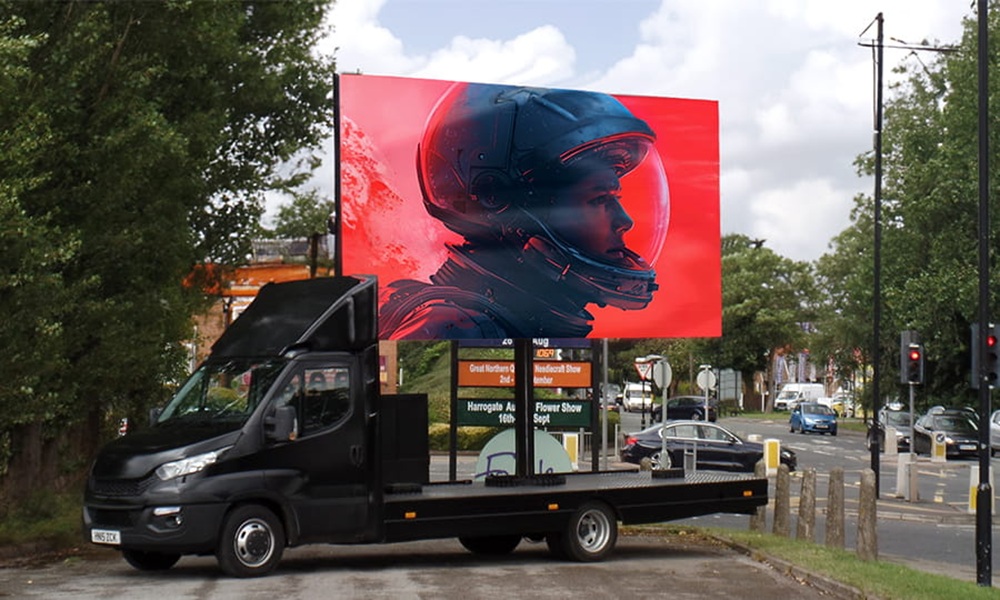
You may not be familiar with the term “LED display,” but the product itself has become increasingly common over time. You can see them everywhere—car washes, gas stations, airports, restaurants, and more. These are digital displays used to deliver information over long distances, 24/7.
LED signage happens to be one of the many specialties of Signdealz. We are always happy to help our clients create displays that quickly and effectively communicate promotions, sales, and event information—right when customers are ready to take action.
If you’re interested in LED signage but find the terminology and purchasing process a bit unfamiliar, we’ve put together this quick guide. We’ll briefly introduce the history of LED technology, explain commonly used terms, and help you understand the key options available when choosing an LED display.
LED History
The first LED (Light Emitting Diode) was invented in 1962 by Nick Holonyak at General Electric, and it could only emit red light. In fact, the first practical LED display wasn’t produced until 1968 by Hewlett-Packard, and even then, most LED displays were monochrome. It wasn’t until the 1980s that full-color LEDs (red, yellow, and blue) became available, enabling multi-color displays.
Fun Fact:
Despite the growing popularity of color LED displays, they were still relatively primitive until U2’s “PopMart” tour in 1997. Designer Mark Fisher realized that LED displays could be viewed from long distances and that pixel pitch could be adjusted to create extremely large images. This led to the creation of a massive 170 ft × 56 ft screen for the tour, made up of 150,000 pixels.
LED Terms and Definitions
When discussing LED displays, designers and manufacturers often use technical terms and abbreviations that may seem complex. Here are some simplified definitions to help you get started:
LED (Light Emitting Diode):
You’ve likely seen these lights before. They are bright, energy-efficient alternatives to incandescent bulbs and don’t burn out due to the absence of a filament. Think of them as much smaller versions of traditional bulbs.
Pixel:
A pixel is similar to what you see on a TV or computer screen. Each pixel consists of three LEDs, typically red, green, and blue (RGB), which combine to produce a wide range of colors.
Pixel Pitch:
This refers to the distance between pixels, usually measured in millimeters (e.g., 6mm, 10mm, 16mm). The smaller the pixel pitch, the higher the resolution (and vice versa). For sharp, detailed images, a smaller pixel pitch is required. For simple content like pricing, a larger pixel pitch may suffice.
Matrix:
This is similar to screen resolution. For example, a display with a 45 × 62 matrix has 45 pixels vertically and 62 pixels horizontally.
Viewing Distance:
This refers to the optimal viewing distance—where pixels blend together to form a clear image. A common rule of thumb is about 10 feet per 1mm of pixel pitch.
How to Choose the Right Outdoor LED Sign
Choosing the right Outdoor LED display ultimately depends on how you plan to use it and your budget. Let’s break these down:
How Will You Use Your Outdoor LED Sign?
First, consider your goal and what content you plan to display. If you want to show a large amount of information, images, or animations, you’ll need either a larger screen or higher resolution. Simpler content requires less.
Example:
- A number display system at a local DMV doesn’t need a large size or high resolution—it simply shows queue numbers.
- A large LED screen at a college stadium needs to be bigger and higher resolution so audiences can clearly see scores, animations, and game content.
Other possible applications include:
- Displaying your company logo
- Showing social media or contact information
- Playing videos
- Providing real-time updates
- Displaying data from multiple sources
What Is Your Budget?
Just like TVs and monitors, the cost of Outdoor LED Sign increases with higher resolution, more features, and better materials.
Keep in mind that choosing a lower-quality product to save money may result in hidden costs later. While LEDs themselves don’t burn out easily, poor materials or manufacturing can lead to maintenance issues over time.
A high-quality LED display, on the other hand, allows you to communicate effectively with your audience and achieve a strong return on investment. It can save both time and advertising costs by reaching customers at the right moment.
Purchasing an Outdoor LED Sign
A reliable signage provider will guide you through the selection process, helping you choose the best product for your needs and ensuring you understand how to use it. Our sales and project teams are committed to delivering high-quality products—from advanced features to durable materials and stable performance (we even offer a 2-year warranty to back it up).
Now that you understand the history, terminology, and key considerations—how you’ll use the display and your budget—you’re ready to make an informed decision.
Ready to Get Started?
Contact the Hot Electronics team today. We’re here to help you create the perfect LED signage solution to elevate your business!
Post time: Mar-23-2026