
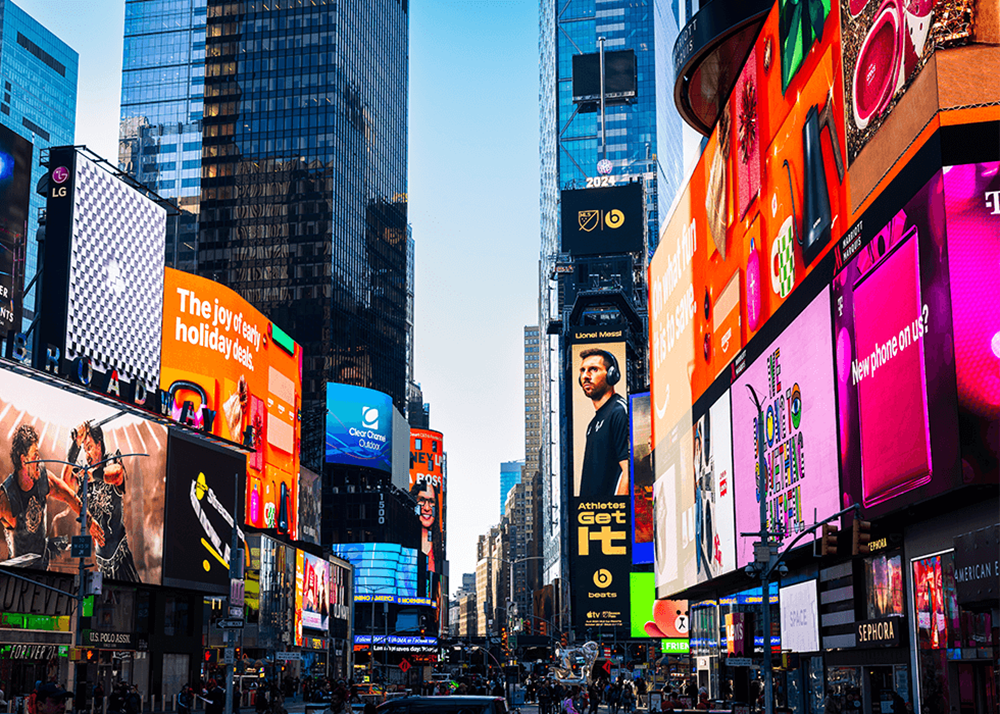
Over the years, event signage technology has evolved at a remarkable pace. Legend has it that at the earliest known events, organizers had to carve a brand-new stone tablet reading: “The lecture on saber-toothed tigers is now taking place in Cave No. 3.” Jokes aside, cave paintings and stone inscriptions gradually gave way to hand-painted signs and printed posters, which were later replaced by backlit displays and projectors.
The emergence of LED technology has completely changed the game. It has significantly improved brightness, viewing angles, and energy efficiency, while also enabling outdoor applications. Today, LED digital signage integrates touchscreens, wayfinding systems, augmented reality, and cloud-based content management systems, allowing multiple displays to be updated in real time—even when you’re nowhere near “Cave No. 3.” This technological advancement has transformed event signage from a simple information tool into a dynamic, interactive platform that enhances attendee experience while providing valuable data for organizers.
What Is LED Signage?
At its core, an LED display is made up of numerous tiny light-emitting diodes arranged into panels or modules. Each LED acts like a miniature light bulb, emitting colored light. Modern LED displays use RGB (red, green, and blue) diodes, which can produce millions of colors by adjusting the intensity of each primary color.
LED digital signage has revolutionized how information is presented and communicated across various events—from conferences and trade shows to sports events and concerts—offering clear advantages over traditional signage methods.
Advantages of LED Signage
Key benefits of LED technology include:
- Exceptional brightness (clearly visible even in direct sunlight)
- High energy efficiency (consumes far less power than older technologies)
- Long lifespan (typically 50,000–100,000 hours)
- Durability in various weather conditions
With vivid visuals, LED displays remain highly visible even in well-lit environments, instantly capturing attention. High contrast and color saturation make content more engaging, while dynamic elements such as animation and video outperform static printed materials in attracting viewers.
Beyond visual impact, LED signage saves significant time for event planners. Content can be remotely managed via dedicated software, eliminating the need for on-site updates. Organizers can schedule, modify, and integrate content in real time, avoiding the delays and costs associated with reprinting physical signage.
This capability is especially valuable for:
- Schedule changes and urgent announcements
- Emergency alerts and updated directions
- Countdown timers for keynote sessions or special events
- Real-time social media integration and audience engagement
- Continuous sponsor messaging throughout the day
With digital displays, last-minute changes that could otherwise cause confusion can be handled seamlessly. For multi-day events, content can be refreshed daily to reflect updated agendas.
Data and Interactivity
LED signage often includes analytics features that provide insights such as:
- Dwell time in front of specific content
- Engagement with interactive elements
- Traffic flow and hotspot areas within a venue
- Effectiveness of different content types
These data points help organizers optimize communication strategies in real time and improve future events based on objective insights rather than subjective feedback.
Interactive LED signage also enables engagement through QR codes, social media integration, live polling, and audience participation—helping build community while delivering valuable data to organizers and sponsors.
Practical Applications of LED Signage
LED signage comes in various forms, offering maximum flexibility:
- Digital billboards: Large outdoor displays
- Indoor displays: Used in retail, corporate, and venue environments
- Video walls: Seamless large-scale displays made from multiple panels
- Flexible LED screens: Adaptable to curved surfaces
- Transparent LED displays: Allow visibility through the screen
This adaptability ensures that digital signage solutions can be tailored to any venue or event requirement—from small meeting rooms to large exhibition centers.
LED signage also enhances navigation and attendee experience. Interactive wayfinding displays help visitors locate exhibitors, meeting rooms, or facilities, reducing confusion—especially in large venues.
Environmental Impact
As sustainability becomes increasingly important, LED displays offer several environmental benefits:
Energy Efficiency
LED signage consumes 50%–90% less energy than traditional lighting technologies, reducing power usage and carbon emissions.
Long Lifespan
With operational lifespans of 5–10 years, LEDs require fewer replacements, reducing waste.
No Hazardous Materials
Unlike fluorescent or neon lighting, LEDs do not contain mercury or toxic gases, making them safer during operation and disposal.
Reduced Printing Waste
Digital signage eliminates the need for printed materials, cutting down on paper, vinyl, and plastic waste.
Many event organizers leverage these sustainability advantages in their marketing, demonstrating both environmental responsibility and operational efficiency.
Conclusion
As the events industry continues to evolve, LED digital signage is leading a communication revolution. The shift from static displays to dynamic, interactive platforms represents not just a technological upgrade, but a fundamental change in how organizers engage with audiences.
While the initial investment requires careful planning, the benefits—enhanced visual impact, real-time flexibility, measurable engagement, and sustainability—make a compelling case.
In today’s competitive event landscape, the ability to communicate effectively, adapt quickly, and capture attention is a critical differentiator. LED digital signage excels in all these areas, making it a strategic choice for any organization looking to elevate event performance and attendee satisfaction.
Whether you’re managing a small business gathering or a large-scale conference, LED signage offers a versatile and powerful solution that transforms not only how information is displayed, but how audiences experience your event.
Post time: Mar-31-2026