
In today’s fast-paced environment, visual impact plays a decisive role in user experience. Indoor LED displays are no longer only about resolution. More importantly, they must integrate seamlessly into environments, support interactive experiences, and maintain long-term reliability.
This article highlights six outstanding indoor LED display series, each selected for its unique value in performance, flexibility, and system integration.
1. All-in-One LED Display Series
1.1 Introduction
When simplicity and high performance need to work together, an all-in-one LED display is an ideal choice. This series integrates core components into a single system, eliminating the need to assemble multiple independent devices. From the controller to audio functions, everything is built in.
It provides an enhanced user experience, especially in environments where technical support is limited or where aesthetics are highly valued. With a clean appearance, easy installation, and ready-to-use design, these displays deliver a complete visual solution right out of the box.
1.2 Features
The most notable feature is its 16:9 aspect ratio. It matches the native format of HD and 4K content, avoiding image distortion or unnecessary black borders. Panel sizes typically range from 110 inches to 165 inches, with resolution options from 720p to 8K.
Brightness levels are optimized for indoor environments, delivering clear images while reducing eye strain. The system integrates speakers and control units into the frame, minimizing external devices and complicated cabling. Power consumption remains low, averaging only 135W/m².
The all-in-one panel also includes a built-in media player and optional wireless screen-sharing functions. Multiple input interfaces are supported, including HDMI, DVI, and USB-C. Combined with a bezel-free design and lightweight aluminum body, the display offers both modern aesthetics and structural durability.
Unlike traditional display solutions, this format eliminates complicated installation processes. Setup is fast and convenient, requiring no specialized technicians. Most units can be operational within 20 minutes after unpacking.
1.3 Applications
All-in-one displays are widely used in meeting rooms, educational institutions, and control rooms. They are also suitable for VIP lounges, exhibition halls, and government facilities.
Corporate users often replace traditional projectors with these displays. Universities use them for remote learning and hybrid classrooms. In hotel lobbies, they can function as digital concierge platforms, displaying event schedules and promotional content.
For environments with limited installation time or technical resources, this series provides a plug-and-play solution. It is also popular in premium hotels and business centers where both design and functionality are equally important.
2. Fine Pixel Pitch LED Display Series
2.1 Introduction
When audiences view screens from close distances, visual clarity becomes critical. Fine pixel pitch LED displays excel in these situations. Using ultra-small pixel spacing, they deliver extremely high-resolution content within a compact structure.
This is more than a visual upgrade. It is a professional solution designed for environments requiring exceptional precision, detail, and smooth video transmission—even under demanding conditions such as broadcast studios. This makes the SP1 Pro series an ideal choice for applications where accuracy is essential.
2.2 Features
Pixel pitch options include P0.9, P1.25, P1.56, and P1.875. The reduced distance between LEDs creates a high pixel density, delivering rich details even at close viewing distances.
The display offers excellent grayscale performance and realistic color reproduction. With a refresh rate of up to 7680Hz, it effectively reduces motion blur and image tearing. Optimized heat dissipation extends lifespan and maintains stable performance.
The series adopts COB (Chip on Board) or Mini LED technology to improve light uniformity and panel durability. Magnetic modules allow tool-free replacement. Modules support front maintenance and are equipped with intelligent temperature sensors for dynamic brightness adjustment.
The system supports signal redundancy, ensuring continuous content transmission even if one input source fails. Optional power backup is also available, which is essential for security control centers and high-risk environments.
2.3 Applications
These displays are ideal for premium conference rooms, broadcasting studios, and control centers. They are also widely used in security monitoring facilities and creative studios where accurate image rendering is critical.
Luxury retailers often use them for window displays to showcase product details with stunning clarity. Museums integrate them into exhibitions for digital storytelling. Medical training institutions rely on precise visualization for anatomy demonstrations and simulation environments.
Their high resolution and slim design make them easy to integrate into exhibitions and product showcases, even in compact architectural spaces.
3. Indoor Fixed Installation LED Display Series
3.1 Introduction
For users seeking stability and durability, the fixed Series is a practical choice. Designed for long-term fixed installation, it delivers reliable performance with a classic and professional appearance.
As a core solution in indoor LED display systems, it combines strong performance with a simple structure, making it widely used across public and commercial environments.
3.2 Features
Pixel pitch options include P2.5, P3, P4, and P5. The series uses black SMD LED packaging to improve contrast and reduce reflections. This is especially important in bright indoor environments where ambient light may affect viewing quality.
It supports both front and rear maintenance access. Installation methods are flexible, including wall-mounted, embedded, and suspended configurations. Both horizontal and vertical viewing angles can reach 160°.
The cabinet structure is usually made of die-cast aluminum, improving heat dissipation while reducing weight. Modules support automatic calibration to maintain color consistency across large display walls. Optional brightness sensors automatically adjust output according to ambient lighting conditions.
Multiple panels can be connected to achieve synchronized content playback. The control system supports both synchronous and asynchronous operation. Data and power redundancy further improve system reliability.
3.3 Applications
IF Series displays can be found in retail stores, lecture halls, shopping malls, and churches. They are also used for digital signage and information displays in transportation hubs and banks.
Hospitals use them in waiting areas to display queue information. Real estate companies use them for digital property presentations. Schools install them in hallways for announcements and notifications.
When applications are diverse and budgets are controlled, this series provides essential functionality. It is an ideal choice for users who need reliability and performance without requiring highly customized solutions.
4. Indoor LED Banner Display Series
4.1 Introduction
Not all LED displays need to be large rectangular walls. The AP3 Banner Series breaks this traditional concept. These slim, lightweight, high-resolution displays are designed for focused information delivery.
They are ideal for spaces requiring vertical or horizontal strip displays rather than large video walls. Think of them as digital visual banners—with greater clarity and flexibility.
4.2 Features
The series supports brightness levels of up to 1000 nits, maintaining clear visibility even under spotlights or near glass entrances. With a refresh rate of up to 7680Hz, it prevents flickering and ensures sharp dynamic text and video playback.
The housing is ultra-thin and lightweight. Panels can be easily connected end-to-end to create seamless extended displays. The zero-gap design supports both hanging and wall-mounted installation.
It supports real-time content streaming and integrates with cloud-based CMS systems. Features include scrolling text, countdown timers, and animations. The display surface uses a matte coating to reduce glare and improve contrast.
4.3 Applications
AP3 displays are widely used in fashion stores, shopping malls, airports, and railway stations. They are ideal for real-time promotions, directional signage, and brand communication.
Fast-food restaurants use them for digital menus. Sports venues use them to display player statistics and advertisements during events. Department stores rely on them for limited-time promotions.
Wherever fast and eye-catching information communication is required, this banner format provides an elegant and effective solution.
5. XR LED Display Series
5.1 Introduction
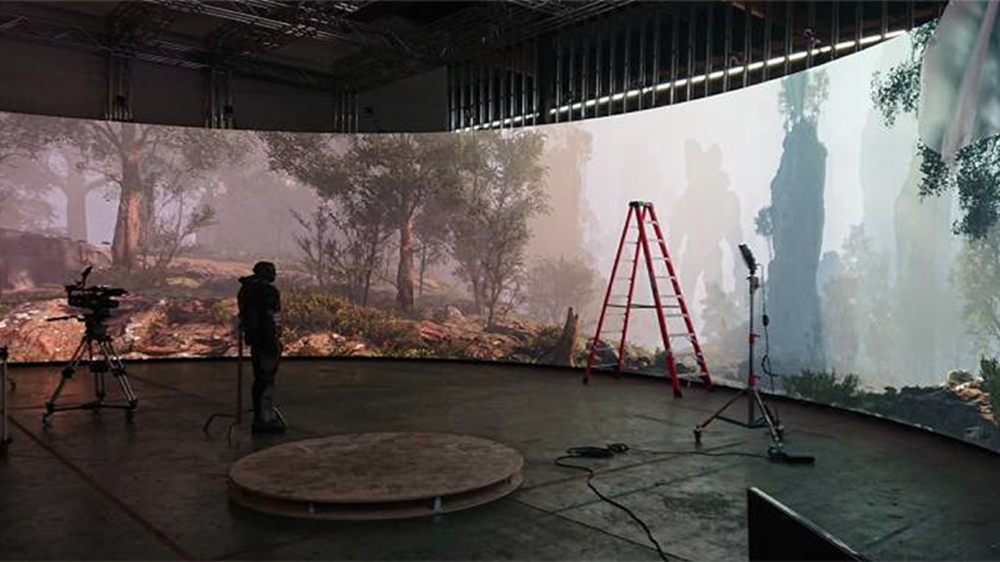
XR LED displays extend LED technology beyond traditional physical screens. Designed for virtual production environments, they combine real-time rendering with camera tracking technology.
These displays work closely with software platforms such as Unreal Engine. They are designed as virtual backgrounds and immersive LED stages, supporting advanced content creation.
5.2 Features
XR led displays feature low-latency response, synchronized locking, and scanning synchronization to work seamlessly with cameras and rendering systems. This enables smooth visuals during camera movement while avoiding flickering and tearing.
They provide wide color depth and precise brightness control. Panels are often designed with curved structures or assembled into three-dimensional configurations, supporting modular stacking with minimal seams.
By controlling surface reflections, unwanted glare during filming and lighting can be reduced. They also support real-time color key adjustments, minimizing post-production workload.
HDR support enhances realistic lighting effects. Optical tracking integration enables real-time parallax correction. Reinforced cabinet structures maintain stability even in large curved installations.
5.3 Applications
XR displays are widely used in virtual film studios, live broadcasting, esports stages, and immersive theater experiences. Production teams use them to create realistic 3D environments without traditional green screens.
Automotive brands produce promotional videos entirely within XR environments. Game studios use XR scenes to capture realistic elements for cinematic content. Educational creators build virtual laboratories and immersive learning spaces.
With precise synchronization and cinema-grade image quality, XR displays are transforming how digital content is created and rendered.
Conclusion
Among these six display series, there is no single absolute winner—only the solution that best matches different application requirements.
Some focus on seamless integration, while others prioritize ultra-high resolution or modular flexibility. From conference rooms and control centers to retail environments and XR production studios, indoor LED technology continues to evolve, delivering precision, adaptability, and creative freedom.
For organizations seeking clarity, performance, and innovative visual solutions, PTCLED continues to stand out as a trusted LED display solution provider.
For more information, please contact us: https://www.led-star.com or Email: sales@led-star.com
Post time: Jun-16-2026