
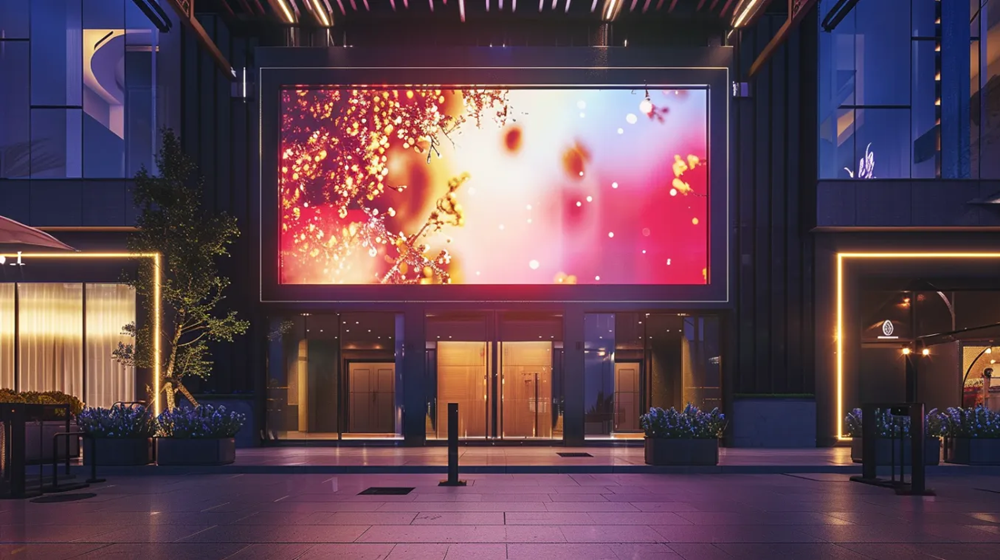
Outdoor LED displays are playing an increasingly important role in advertising, events, and presentations. As technology continues to evolve, new trends are emerging, bringing users better viewing experiences and more effective ways to deliver information.
In this article, Hot Electronics explores eight key trends shaping the future of outdoor LED displays.
1. High-Resolution Outdoor LED Displays
One of the most significant trends in the outdoor LED display industry is the continuous improvement in display resolution. Higher resolutions allow screens to deliver sharper, clearer images, creating an exceptional visual experience for audiences.
In recent years, fine-pitch LED technology has made remarkable progress. Smaller pixel pitches increase pixel density, resulting in more detailed and clearer images. This is particularly important in outdoor environments, where natural light can affect image quality.
Related Reading: Tips for Successful Outdoor LED Screen Installation
High resolution also makes it easier than ever to present interactive content. Sports events, concerts, and conferences can use LED screens to broadcast live footage, deliver real-time information, and build stronger connections with audiences.
Demand for high-resolution LED displays is growing significantly. Advertisers recognize that investing in advanced display technology is essential to capturing consumer attention. Upgrading LED displays not only improves visual performance but also helps build long-term brand value.
2. 3D Outdoor LED Screens
The development of 3D technology has also had a major impact on outdoor LED screens. These displays are no longer limited to flat images; they can now deliver impressive three-dimensional visual effects.
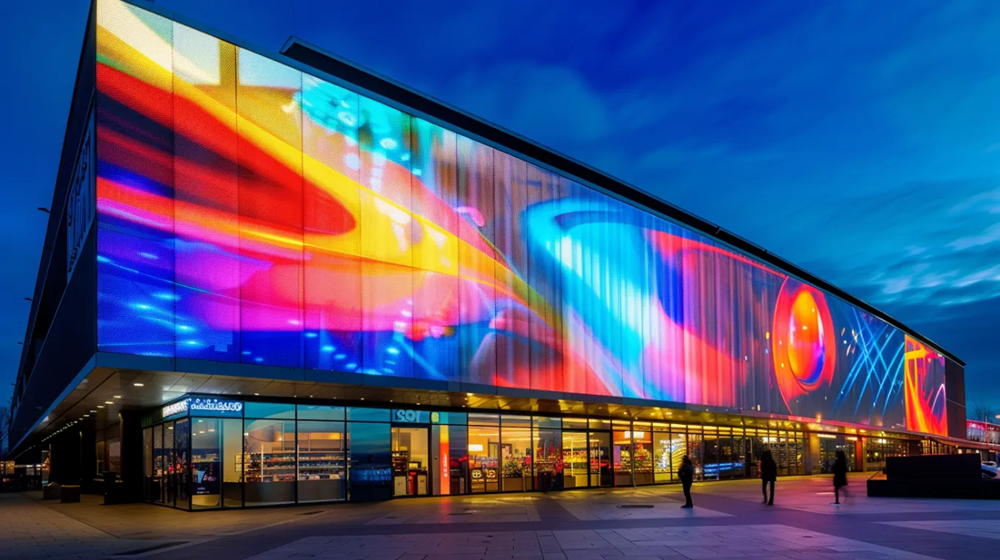
3D LED screens represent a breakthrough in display technology. By combining 3D animated video content with specially designed LED screen structures, they create stunning three-dimensional visuals without requiring viewers to wear 3D glasses.
One popular design is the L-shaped LED screen, consisting of two display surfaces joined at a 90-degree angle. When combined with 3D graphics precisely calculated according to the viewing angle, images appear to jump out of the screen, creating a powerful visual illusion that captures audience attention.
Related Reading: What Are the Main 3D Technologies Used in 3D LED Displays?
Traditional outdoor LED displays typically use flat modules joined at the corners, which can create visible black lines at the intersection and compromise the overall viewing experience.
However, technological advancements have made it possible to use specially designed LED cabinets to achieve seamless 90-degree screen connections. This eliminates visible dividing lines and pixel gaps, delivering an unprecedentedly realistic and immersive 3D visual experience.
Many shopping malls and outdoor advertising locations are now using 3D LED screen solutions to attract attention and strengthen brand recognition.
3. 100% Front Maintenance for Outdoor LED Displays
Traditional outdoor LED displays often require considerable installation space behind the screen for maintenance. This can make the overall structure bulky and space-consuming. However, for projects requiring a slim profile or installations with limited space, front-maintenance outdoor LED displays offer an ideal solution.
With advanced structural design, components such as LED modules, power supplies, and control cards can be easily removed and replaced from the front using simple tools. This saves installation space, reduces maintenance time, improves operational efficiency, and provides greater flexibility during installation.
Learn More: The Latest Trends in Outdoor LED Display Development
Thanks to optimized structural design, fully front-maintenance LED screens can have an overall thickness of only 200–300 mm, compared with 750–900 mm for conventional rear-maintenance displays.
This makes them an ideal choice for projects with high aesthetic requirements, wall-mounted installations, or space-constrained locations such as building facades, advertising pillars, and densely populated urban areas.
4. Lightweight Materials for Modern Outdoor LED Displays
Traditionally, outdoor LED display cabinets have been manufactured using steel plates because steel is easy to process and relatively cost-effective. However, one of the biggest disadvantages of steel is its weight, which limits its use in applications where lightweight construction is essential.
Examples include suspended installations, beam-mounted structures, and projects where the overall load must be reduced.
Because of their heavy structure, traditional steel cabinets also require thicker and stronger supporting frames, increasing the overall structural weight and project costs.
To overcome these limitations, a growing trend in the outdoor LED industry is the adoption of lighter materials, such as aluminum alloys, magnesium alloys, and even carbon fiber.
Among these options, aluminum alloy is widely regarded as the best balance between performance and cost. It is significantly lighter than steel while remaining much more affordable than premium materials such as magnesium alloy and carbon fiber.
As a result, outdoor LED displays featuring aluminum alloy cabinets are becoming increasingly popular in projects that require optimized structural loading without compromising durability or appearance.
5. Fanless Operation
Using aluminum alloy in outdoor LED display screen construction not only reduces overall weight but also provides better heat dissipation than traditional materials such as steel.
Thanks to aluminum’s excellent thermal conductivity, the system can operate efficiently without requiring cooling fans.
A fanless design eliminates one of the few mechanical components in the system. Cooling fans are common sources of noise, power consumption, and potential mechanical failure over extended periods of operation.
This results in lower maintenance costs, improved system stability, and a longer display service life.
Fanless outdoor LED displays are particularly suitable for noise-sensitive environments such as residential areas, hospitals, shopping malls, and exhibition centers, as well as locations where green building standards are a priority.
They are also an ideal solution for businesses seeking modern, energy-efficient display systems that deliver reliable long-term performance.
6. Outdoor LED Displays with Superior Weather Resistance
Traditional outdoor LED displays do not always provide consistent dustproof and waterproof protection. Typically, the front panel achieves an IP65 rating, while the rear panel may only offer approximately IP43 protection.
This is mainly due to active ventilation designs, which rely on air vents and cooling fans to regulate internal temperatures. However, these openings can easily accumulate dust, potentially affecting equipment performance and service life.
To address this issue, some manufacturers have introduced aluminum enclosures with integrated air-conditioning systems. While this approach helps reduce dust accumulation and manage heat, it also brings higher operating costs, increased energy consumption, and additional maintenance requirements for both fans and air-conditioning units, not to mention the resulting carbon emissions.
IP66 Protection on Both Front and Rear Sides
A more advanced solution features a fully aluminum LED module design with IP66-rated protection on both the front and rear sides. It eliminates the need for cooling fans and other mechanical components.
Components such as switching power supplies and control cards are also integrated into independent aluminum compartments with efficient heat dissipation designs.
This ensures stable system operation even under challenging outdoor conditions, including heavy rain, high temperatures, and dusty environments.
As a result, modern outdoor LED screens are becoming more durable and energy-efficient, while requiring less maintenance. They are particularly suitable for projects that demand continuous operation under unpredictable weather conditions.
7. Lower Operating and Maintenance Costs
After years of development in the display industry, a new power control technology known as Common Cathode has emerged. Compared with the traditional Common Anode control method, this technology can reduce energy consumption by up to 50%.
Instead of supplying power to all pixels in the same way, Common Cathode technology independently supplies power to the red, green, and blue LED diodes, optimizing energy efficiency.
This innovation is particularly important for outdoor LED displays, which require high brightness to remain clearly visible even under direct sunlight.
Learn More: 8 Factors Affecting the Operating Costs of Outdoor LED Displays
Advanced display products such as Big Outdoor S now incorporate Common Cathode technology to significantly reduce power consumption.
This not only optimizes monthly operating costs but also reduces heat generation and minimizes the need for cooling system maintenance, ultimately improving the overall durability of the equipment.
By adopting Common Cathode control technology, businesses can improve their return on investment (ROI) while benefiting from sustainable, long-term performance.
This makes it an ideal choice for outdoor advertisers seeking powerful yet cost-effective display solutions.
8. Choose Hot Electronics for Your Outdoor LED Display Project
When deciding to invest in an outdoor LED display, choosing a reputable and experienced manufacturer and installation partner is essential. Hot Electronics is an excellent choice for businesses seeking reliable LED display solutions.
With a team of experienced engineers and industry specialists, Hot Electronics focuses on LED display technology and has extensive expertise across various aspects of the industry. The team is committed to providing tailored solutions to meet different customer requirements.
Learn More: Outdoor Advertising LED Screen Installation | Fast and Cost-Effective Solutions
Hot Electronics offers a wide range of LED display products to accommodate different applications, technical requirements, and budgets. From advertising LED displays to outdoor transparent LED screens, customers can find suitable solutions for their projects.
Beyond product manufacturing, Hot Electronics also places great emphasis on after-sales support. Its professional support team is always ready to provide technical guidance and assistance, ensuring customers receive reliable support throughout the product’s service life.
Whether you are planning an outdoor advertising project, a large-scale event, or a commercial display installation, Hot Electronics is committed to delivering professional LED display solutions tailored to your needs.
Post time: Nov-05-2026