
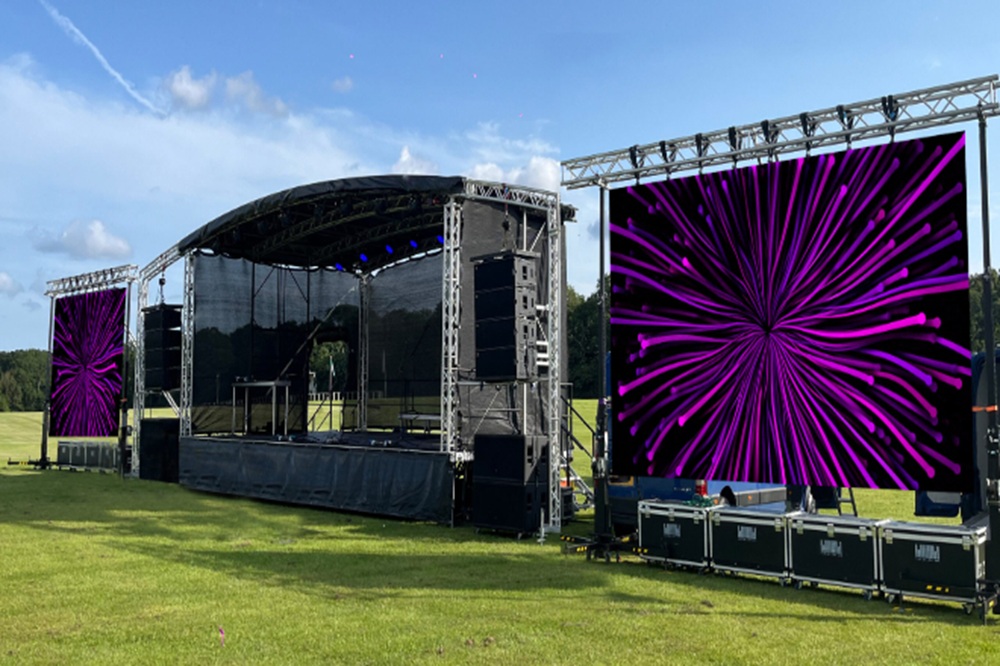
LED Display Types
Are you curious about the different types of LED screens and how they can enhance your visual performance?
With the wide variety of LED displays available today, understanding their unique features and applications can feel overwhelming—especially when you need to choose the right screen for your business or event.
In this guide, we’ll walk you through various types of LED screens—from ultra-bright outdoor displays to innovative transparent panels. We’ll also break down the key advantages of each type to help you make a smart decision for your next project.
What Is an LED Screen?
An LED (Light Emitting Diode) screen is a popular display technology known for delivering vibrant visuals and high-performance output. Unlike traditional display systems, LED screens use diodes that emit light when an electric current passes through them. This allows LED displays to offer superior brightness, contrast, and color range.
Main Components of an LED Screen:
- Cabinet
- LED modules
- Power supply
- Receiving card
- Sending card or video processor
- Power cables
- Signal cables
Among these, the LED module is the core component. A typical LED screen consists of multiple modules, each containing an array of LEDs. These modules combine to form a larger, seamless display capable of handling various resolutions and pixel pitches.
Pixel pitch, the distance between the centers of two adjacent pixels, is a critical factor as it determines the display’s resolution and clarity.
LED Display Technologies
Before diving into LED display types, it’s important to understand the core technologies used in LED modules.
SMD (Surface-Mounted Device)
SMD technology is widely used in modern LED displays. LED chips are mounted directly onto a PCB, enabling compact design and vibrant visuals. SMD LEDs provide high resolution and excellent color uniformity, making them ideal for both indoor and outdoor applications requiring sharp image quality.
DIP (Dual In-line Package)
DIP is an older but still widely used technology known for its durability and high brightness. While it offers lower color accuracy compared to newer technologies, its robustness makes it ideal for outdoor environments requiring high durability and long-distance visibility.
GOB (Glue-on-Board)
GOB technology applies a transparent protective layer over LED modules. This significantly enhances impact resistance, as well as dustproof and waterproof capabilities, making it ideal for rental and portable applications.
COB (Chip-on-Board)
COB technology integrates multiple LED chips directly onto a substrate, forming a compact module. It offers excellent heat dissipation and high brightness efficiency, resulting in better color consistency and image quality—especially for fine-pitch indoor displays.
Classification by Packaging Technology
DIP LED Displays
Built with DIP modules, these displays are highly durable and suitable for outdoor use.
Advantages:
- High brightness for outdoor visibility
- Strong weather resistance
Disadvantages:
- Lower color consistency
- Higher power consumption
Applications:
- Outdoor billboards
- Stadium displays
- Public information boards
SMD LED Displays
LEDs are mounted directly on the PCB surface, offering high resolution and wide viewing angles.
Advantages:
- High pixel density
- Wide viewing angle
- Lightweight and thin
Disadvantages:
- Lower protection level
- Less suitable for harsh outdoor environments
Applications:
- Indoor advertising
- Stage backdrops
- Retail and control rooms
GOB LED Displays
Designed with enhanced protection, ideal for rental and high-mobility scenarios.
Advantages:
- Strong protection (waterproof, dustproof, impact-resistant)
- Easier maintenance than COB
- Wide viewing angles
Disadvantages:
- Heat dissipation challenges
- More complex manufacturing
Applications:
- Events and exhibitions
- Outdoor weddings and festivals
- Rental installations
COB LED Displays
Advantages:
- Excellent heat dissipation
- High reliability
- Superior image quality for close viewing
Disadvantages:
- Higher manufacturing and maintenance costs
- More complex repair process
Applications:
- Fine-pitch indoor displays
- Control rooms
- High-end retail environments
Classification by Color
Monochrome LED Displays
Single-color displays used for simple text and signage.
Applications: Traffic signs, scoreboards
Advantages: Cost-effective, easy to maintain
Dual-color LED Displays
Displays two colors (typically red and green) for enhanced information delivery.
Applications: Banks, retail signage
Full-color LED Displays
The most widely used type, capable of displaying millions of colors.
Applications: Concerts, advertising, stadiums
Advantages: High brightness, rich color, dynamic content
Classification by Application Environment
Indoor LED Displays
Designed for close viewing with high resolution and lower brightness.
Applications: Meeting rooms, retail, exhibitions
Outdoor LED Displays
Built to withstand weather conditions with high brightness for sunlight visibility.
Applications: Billboards, stadiums, public spaces
Classification by Installation Type
Fixed LED Displays
Permanent installations with strong structural stability.
Advantages:
- Durable and stable
- Suitable for long-term use
Disadvantages:
- Higher initial cost
- Limited flexibility
Applications: Billboards, malls, transportation hubs
Rental LED Displays
Lightweight and modular, designed for quick setup and dismantling.
Advantages:
- Easy transport and installation
- Flexible configurations
- Cost-effective for temporary use
Disadvantages:
- Less stable in extreme conditions
- Higher long-term maintenance
Applications:
- Concerts and events
- Trade shows
- Stage performances
Classification by Pixel Pitch
Pixel pitch (e.g., P2, P5, P10) refers to the distance between pixels.
- Smaller pitch → higher resolution (e.g., P1.25)
- Larger pitch → better for long-distance viewing (e.g., P10, P16)
Classification by Shape
- LED Cube Displays – Multi-sided visual experience
- Spherical LED Displays – 360° viewing
- Circular LED Displays – Ideal for central viewing environments
- Curved LED Displays – Flexible, immersive designs
- Right-angle LED Displays – Seamless corner integration
- Flexible LED Displays – Custom shapes for creative installations
Other Specialized LED Displays
Transparent LED Displays
Allow light to pass through, ideal for glass facades and storefronts.
LED Poster Displays
Slim, portable, and easy to install with multiple control options.
LED Floor Displays
Interactive displays designed for high foot traffic, often using sensor technology.
Conclusion
Understanding the different types of LED displays is essential for selecting the right solution for your needs. Each type offers unique advantages suited to specific applications—from eye-catching outdoor advertising to creative and immersive installations.
By choosing based on factors like shape, pixel pitch, and functionality, businesses can significantly enhance their visual communication strategy.
If you’re still unsure which LED display is right for your project, feel free to contact us—we’re here to help.
Post time: Apr-21-2026