
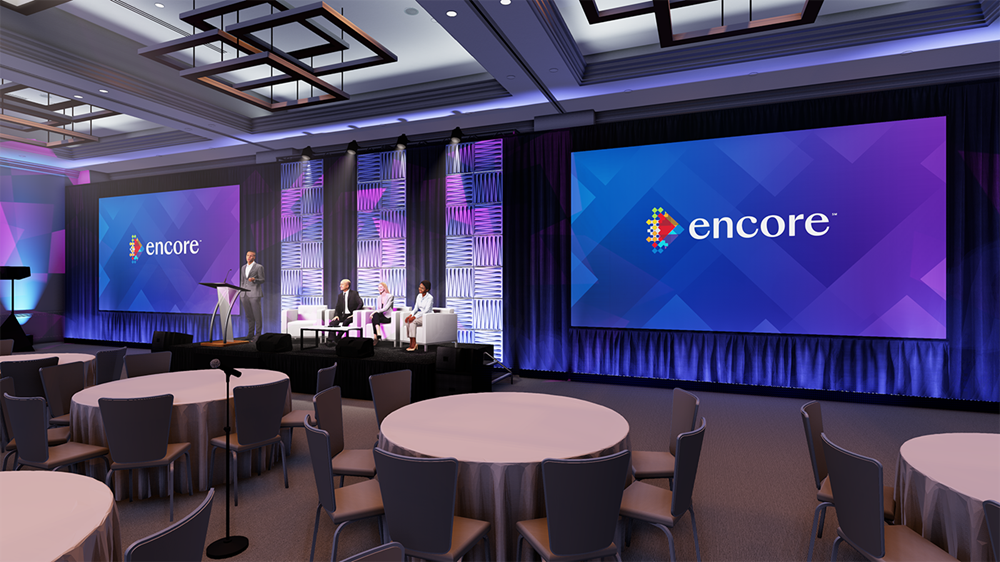
Each pixel in an LED display uses three independent standard LEDs in three colors. An LED video wall display combines multiple LED modules together to create a large, seamless display.
Compared with other display technologies, LED displays offer superior brightness and color reproduction.
When installing an LED display, many factors need to be considered, including available space, pixel pitch, expected viewing distance, environment, and maintenance requirements.
Choosing the right display technology for your next project is not always easy. If you are considering an LED display (also known as an LED video wall), continue reading to learn how video walls work, the advantages of LED technology, and the seven key factors to consider before installation.
How Does an LED Display Work?
Each pixel in an LED display uses three standard LEDs, consisting of red, green, and blue colors. These LEDs can be combined into a surface-mount device (SMD). Each color LED (also known as a sub-pixel) receives an independent driving signal based on the video content, allowing the display to generate millions of colors.
LED video wall displays use modular panels or modules to build large display areas. Each module consists of a series of identical LED units containing circuit boards. Through electrical connections, each pixel receives its required unique RGB driving signals as well as power from the module power supply.
This image shows a typical LED light bar assembly with a cabinet. From left to right: LED module, cabinet containing the power supply, receiving card, and hub, and the cabinet cover.
The modular design makes LED displays easier to maintain. If an LED fails, you only need to replace the module containing the faulty LED instead of replacing the entire display wall. These modules are usually installed inside cabinets, which contain power supplies and electronic components that control each module while allowing video signal connections.
Some seamless display designs place the power supply and control electronics in a separate enclosure connected to the frame that supports the LED modules. In addition, some products place the processing system outside the cabinet.
What Are the Advantages of LED?
What makes LED technology stand out? Let’s explore some of the key benefits of LED displays.
Brightness
LED displays offer a brightness range unmatched by other display technologies, from less than 2,000 nits (cd/m²) to as high as 12,000 nits.
This high brightness capability is especially beneficial in environments with strong ambient lighting, such as lobbies and atriums. For large-scale applications, other technologies often cannot compete or require more complex systems (such as multi-projector setups) to achieve brightness levels comparable to LED displays.
Color Reproduction
LED displays provide a wider color gamut, more vibrant colors, sharper images, and more realistic color performance, making them ideal for applications that require high color accuracy.
To understand why, we need to look at two important industry color reproduction standards: DCI-P3 and NTSC.
DCI-P3 is mainly used in environments with strict viewing requirements, such as control rooms, while NTSC, a standard widely used in broadcast television, provides excellent color consistency and is commonly applied in corporate lobbies and digital signage LED displays.
The image shows three LED boards installed on a mounting bracket.
LED display solutions such as MicroTiles® LED support 12-bit input sources, 4K@120Hz, and HDR10, delivering high brightness and cinema-level color performance with stunning, realistic details.
Seamless Image Quality
One of the biggest advantages of LED screen is their nearly seamless image performance.
LED display units are designed to fit closely together without increasing the pixel distance between adjacent modules. At normal viewing distances, the seams between modules are almost invisible because the areas surrounding the LEDs are carefully designed.
What Should You Consider Before Installing an LED Display?
When designing an LED display system, several key factors should be considered during installation planning.
Here are the seven most important questions to consider during the project planning stage.
1. Space
When installing an LED display, available space may be the most important consideration.
You will find that it affects almost every other factor discussed below. Before installation, carefully evaluate the space and check the size and location of the planned display wall to ensure the best viewing experience.
You should also consider different viewing angles within the space to ensure everyone can clearly see the video wall.
Some LED video wall solutions, such as MicroTiles® LED, can be arranged in almost unlimited configurations, including 90-degree internal or external corners, concave or convex curves, and even 3D shapes, providing greater flexibility for different applications.
2. Structure
Although this may seem obvious, it is worth mentioning that you need to consider the size and weight of the LED display you plan to install and ensure that the wall or mounting surface can safely support the load.
3. Pixel Pitch
There are many pixel pitch options available, but the best choice depends on your application requirements and the viewing distance of your planned video wall.
A smaller pixel pitch provides higher resolution and better clarity for applications such as control rooms, but it may not be necessary for long-distance viewing environments such as corporate lobbies.
An LED display screen showing an image of a clothing retail store.
4. Viewing Distance
There is no fixed rule for the ideal viewing distance for different pixel pitches.
Choosing the correct pixel pitch can maximize display performance and provide the best viewing experience. Even if individual pixels are difficult to distinguish at a typical viewing distance and resolution, your video wall can still create an impressive visual experience with brilliant brightness, vivid colors, and strong contrast.
Recommended optimal viewing distances for LED displays:
| LED Display Pixel Pitch (mm) | Calculation | Recommended Viewing Distance |
|---|---|---|
| 0.8 mm | 0.8 mm × 3 m | 2.4 m (7.87 ft) |
| 1.0 mm | 1.0 mm × 3 m | 3 m (9.84 ft) |
| 1.25 mm | 1.25 mm × 3 m | 3.75 m (12.3 ft) |
| 1.5 mm | 1.5 mm × 3 m | 4.5 m (14.76 ft) |
| 1.9 mm | 1.9 mm × 3 m | 5.7 m (18.7 ft) |
| 2.5 mm | 2.5 mm × 3 m | 7.5 m (24.6 ft) |
*The calculation of optimal viewing distance should use meters rather than feet. The formula is only an estimate and should be used as a reference.
5. Power Supply and Connectivity
Ensure that the installation location has sufficient power capacity and properly manage cables for video input, power supply, and control connections.
6. Brightness and Environment
Environmental conditions must be considered during installation to adjust brightness levels, ensure clear visibility without glare, calibrate colors, and align panels accurately.
This helps achieve seamless visual performance and consistent brightness across the entire display.
7. Cooling, Ventilation, and Maintenance
Proper cooling and ventilation are essential to prevent overheating, especially for large-scale installations.
Depending on your application, you may need to plan front-access maintenance channels to make module servicing and repairs easier while reducing downtime, as the entire structure does not need to be removed for maintenance.
Post time: Jun-23-2026