
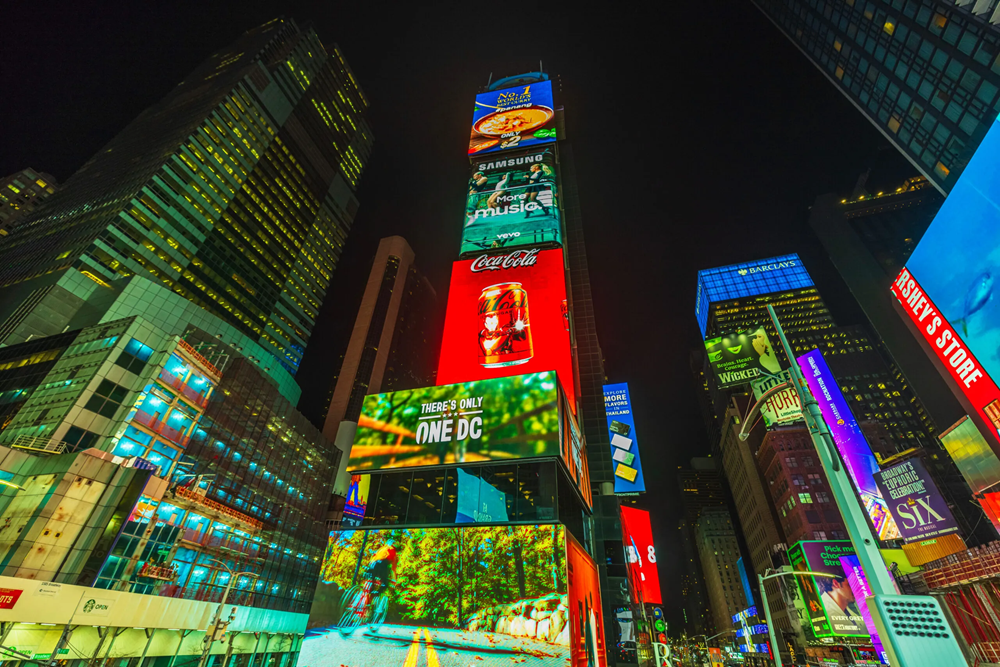
LED display technology has evolved dramatically over the past few years. What was once considered an advanced visual solution has quickly become a mainstream technology across retail, entertainment, corporate environments, transportation, and public spaces.
Today’s LED displays are brighter, more intelligent, more flexible, and easier to operate than ever before. As businesses continue to invest in digital visual solutions, one question is becoming increasingly important:
Will today’s LED display technology still deliver value tomorrow?
Businesses want more than impressive visuals. They are looking for display systems that can adapt to changing requirements, support future upgrades, reduce operating costs, and deliver reliable performance over the long term.
This is why future-ready LED display solutions are becoming increasingly important.
LED displays are gaining ground as a preferred visual communication solution because they combine high image quality, flexible installation options, long service life, and strong audience impact. Modern LED technology is no longer simply about putting content on a screen—it is about creating a smarter and more adaptable communication platform.
So, what does the future hold for LED displays?
Key Trends Driving the Future of LED Display Technology
The next generation of LED displays will focus on more than brightness and resolution. Intelligence, flexibility, energy efficiency, and seamless integration will play an increasingly important role.
Here are some of the major trends to watch.
1. Transparent LED Displays for Modern Spaces
Transparent LED displays are opening up new possibilities for digital signage and architectural applications.
Unlike conventional LED screens, transparent displays allow light and views to pass through the screen while still delivering dynamic digital content. This makes them particularly suitable for glass storefronts, shopping malls, exhibition spaces, showrooms, and modern architectural environments.
For retailers, this technology offers an effective way to combine physical products with digital marketing. Customers can still see through the glass and view merchandise while promotional content is displayed simultaneously.
The result is a more immersive visual experience without making the space feel enclosed or overcrowded.
For businesses looking to combine visual impact, architectural aesthetics, and digital communication, transparent LED displays offer an increasingly attractive solution.
2. Modular and Mobile LED Displays
Business needs are rarely static. Events move from one venue to another, exhibitions require different screen sizes, and temporary installations may only be needed for a few days or weeks.
This is where modular and mobile LED displays offer a major advantage.
Modular LED systems are built from individual cabinets or panels that can be assembled into different configurations. Businesses can adjust the size and layout of a display based on the venue, viewing distance, and application.
A compact setup can be used for a small event, while the same system can be expanded for a large exhibition or stage.
Mobile LED systems also simplify installation and transportation. Faster setup and dismantling can reduce labor requirements, shorten preparation times, and improve equipment utilization.
For companies that need flexibility without investing in multiple display systems, modular LED technology provides a practical and scalable option.
3. AI-Driven Content and Display Management
The future of LED displays is not only about hardware. Software and content management are becoming equally important.
Modern LED display systems can support real-time content updates and centralized management. Businesses can schedule different content according to time, location, audience, or specific events.
For example, a retail display could promote one campaign during the morning, switch to another during peak shopping hours, and display promotional offers in the evening.
Artificial intelligence can take this concept even further.
AI-powered systems can analyze data and help determine what type of content should be displayed at a particular time. This creates more personalized and relevant communication while reducing the need for constant manual management.
As a result, LED displays are evolving from passive screens into intelligent digital communication platforms.
4. Fine-Pitch and Ultra-Fine-Pitch LED Displays
LED displays were traditionally associated with large-format, long-distance viewing. Advances in pixel technology are changing that perception.
Fine-pitch and ultra-fine-pitch LED displays offer much smaller pixel spacing, allowing them to produce highly detailed images at significantly closer viewing distances.
This makes them suitable for applications such as:
- Corporate meeting rooms
- Control centers
- Broadcast studios
- Command centers
- High-end retail environments
- Executive presentation spaces
With sharper text, smoother images, and improved detail, fine-pitch LED displays are increasingly being considered as an alternative to conventional LCD video walls.
As pixel pitch continues to decrease, LED technology is expected to become even more competitive in indoor, close-viewing applications.
Why These Developments Matter to Businesses
Technological innovation is valuable only when it creates measurable benefits for businesses.
The latest developments in LED display technology can deliver several important advantages.
Enhanced Visual Communication
Higher resolution, improved brightness, and better color performance allow businesses to deliver messages more clearly and attract attention more effectively.
For brands, this can mean stronger visual impact and better communication with customers.
Greater Audience Engagement
Dynamic digital content is more likely to attract attention than static communication. Whether used in a retail store, exhibition, event venue, office, or public space, LED displays can create more engaging experiences.
The more effectively a display captures attention, the greater its potential communication value.
Lower Long-Term Operating Costs
Modern LED technology continues to improve in areas such as energy efficiency, heat management, durability, and maintenance.
Lower power consumption, longer component life, and reduced maintenance requirements can help businesses control total operating costs over the lifetime of the display.
Easier Upgrades and Expansion
Future-ready LED systems should not require businesses to start from scratch whenever their needs change.
Modular and scalable designs make it easier to expand screen size, modify configurations, replace components, or relocate equipment.
This provides businesses with greater flexibility and helps protect their initial investment.
How Hot Electronics Helps Businesses Prepare for the Future
Choosing the right technology is only part of the equation. The experience and capabilities of the LED display manufacturer also matter.
Hot Electronics develops LED display solutions for a wide range of professional applications, with a focus on performance, flexibility, and long-term reliability.
Solutions for Different Applications
From indoor fine-pitch LED displays to outdoor LED screens, rental displays, transparent LED solutions, and modular systems, Hot Electronics offers options designed for different environments and requirements.
Energy-Efficient Display Technology
Energy efficiency is becoming increasingly important for businesses operating large-format displays for extended periods.
Hot Electronics focuses on display solutions that balance brightness, image performance, and energy consumption to help customers improve operational efficiency.
Scalable Modular Architecture
Modular LED technology allows display systems to adapt as business requirements evolve.
Screens can be expanded, reconfigured, or relocated without necessarily replacing the entire system, providing greater flexibility for long-term projects.
Reliable Performance for Professional Applications
Professional LED displays often need to operate for extended periods in demanding environments.
Durability, stable performance, and reliable operation are therefore essential considerations when selecting an LED display solution.
The Future Is More Than Just a Brighter Screen
The future of LED display technology is not simply about achieving higher brightness or higher resolution.
It is about creating smarter, more adaptable, more efficient, and more sustainable display solutions.
Transparent displays are opening new possibilities for architecture and retail. Modular systems are making displays easier to configure and reuse. AI is transforming content management, while fine-pitch technology is bringing LED display screen into more indoor and close-viewing applications.
For businesses, these developments mean greater flexibility, stronger visual communication, and better long-term investment value.
Whether you are installing your first LED display or upgrading an existing system, understanding where the technology is heading can help you choose a solution that is ready not only for today, but also for tomorrow.
Ready for the Next Generation of LED Display Technology?
The right LED display should do more than meet your current requirements—it should have the flexibility to evolve with your business.
If you are looking for a future-ready LED display solution, explore the possibilities with Hot Electronics. Our team can help you evaluate different display technologies and identify the right solution based on your application, environment, viewing distance, and long-term goals.
Post time: Aug-25-2026