
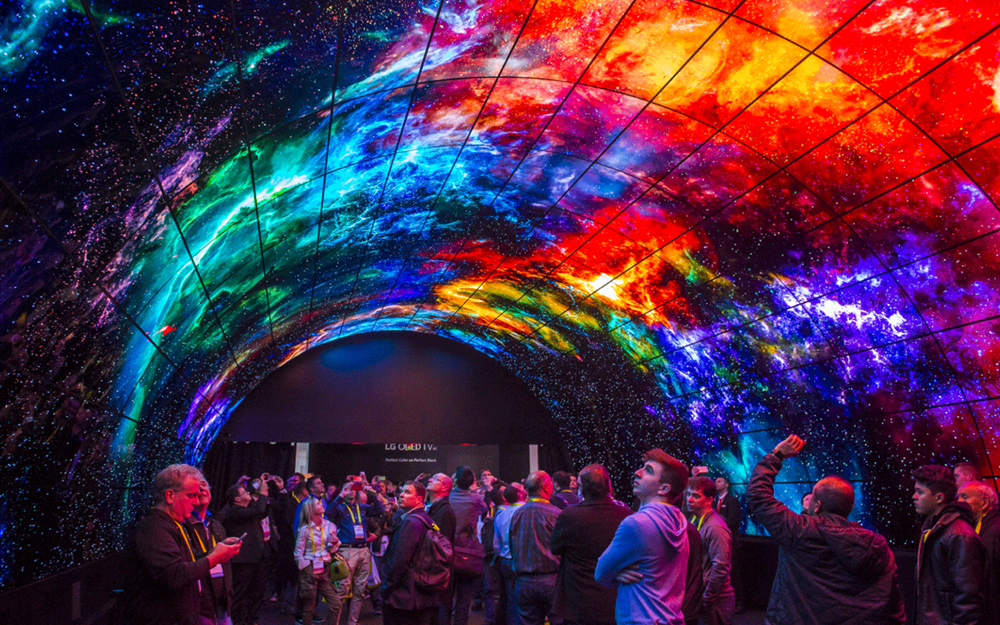
Large LED displays have completely transformed how we access information in public spaces. These screens illuminate transportation hubs, shopping malls, and airports, showing timetables, directions, and emergency alerts. Their vibrant visuals capture attention, making advertising and information delivery far more effective.
Understanding these displays helps you make informed decisions. The right LED screen size is crucial for different application scenarios. Indoor LED displays offer high resolution for close viewing, while outdoor LED displays require high brightness to withstand sunlight. Different types of LED displays suit different environments, and refresh rate ensures smooth visuals. Exploring large LED displays allows you to better understand their value and impact.
1. Advantages of Large LED Displays
Large LED displays have become a breakthrough in visual technology. Key advantages include:
Energy efficiency
LED screens are highly energy-efficient. Compared with traditional digital screens and projectors, they consume less power, bringing significant benefits.
Lower electricity costs
Businesses and event organizers save on electricity bills due to lower power consumption. Over time, this results in substantial cost savings, making LED displays a cost-effective long-term solution.
Environmental impact
LED displays contribute to a greener planet. Lower energy consumption reduces carbon emissions and supports sustainability. Using LED technology is a step toward a more sustainable future.
Enhanced visual performance
Large LED displays deliver unmatched image quality with vibrant and clear visuals, suitable for a wide range of applications.
Brightness in all lighting conditions
LED screens remain bright even in low-light environments or under direct sunlight, making them suitable for both indoor and outdoor use.
Clarity and color accuracy
They provide excellent clarity and color reproduction with a wide color gamut, delivering vivid and realistic visuals that enhance audience engagement.
Customization
Large LED displays offer strong customization capabilities.
- Size flexibility: From small retail screens to massive stadium displays, various sizes are available.
- Flexible configuration: Screens can be shaped and arranged to fit different creative and spatial requirements.
Large LED displays not only perform well but also offer clear advantages over traditional technologies. If you are considering LED investment, Hot Electronics provides a wide range of high-quality solutions.
2. How Large LED Displays Work
Large LED displays rely on advanced technology to create stunning visuals.
Image formation
Role of diodes
Each LED diode emits light, forming pixels. Red, green, and blue diodes combine to produce a full color spectrum, enabling vivid and accurate color reproduction.
Pixels
Pixel density determines image clarity. Higher pixel density results in sharper images and more visual detail, especially important for close viewing applications.
Brightness and color settings
Adjustability
Brightness can be adjusted according to ambient lighting conditions, ensuring optimal visibility indoors and outdoors.
Scenario-specific settings
Outdoor displays require higher brightness for sunlight readability, while indoor displays focus on contrast and color accuracy.
3. Features of Large LED Displays
High contrast
High contrast improves visual performance by producing deep blacks and bright whites, resulting in vivid imagery.
Vibrant color display
Colors appear more vivid and lifelike, making them ideal for advertising and entertainment.
Image quality impact
Higher contrast improves clarity, depth, and viewer engagement.
Durability
Large LED displays are designed for long-term continuous operation.
- Suitable for extended usage
- Low maintenance requirements due to strong structural design
4. Challenges of Large LED Displays
Light pollution
Outdoor LED displays may contribute to light pollution if not properly managed.
Installation considerations
Improper brightness or placement may affect nearby residents and wildlife.
Mitigation strategies
- Adjust brightness at night
- Use sensors for ambient light adjustment
- Apply light-shielding designs
Cost considerations
- High initial investment
- Higher energy consumption for large outdoor installations
However, energy efficiency can offset long-term costs.
5. Types of Large LED Displays
Outdoor vs indoor displays
Key differences:
- Outdoor displays require high brightness and waterproofing
- Indoor displays focus on high resolution and closer viewing distance
Applications:
Indoor LED screens are widely used in retail, exhibitions, and entertainment. Outdoor displays are used for advertising and public information systems.
Transparent LED screens
Transparent LED screens allow light to pass through, creating a see-through effect.
Features:
- Lightweight structure
- Flexible installation
- Transparent visual effect
Applications:
- Retail window displays
- Museums and exhibitions
- Architectural façades
6. Applications in Events and Advertising
Installation and transport
LED screens are easy to install and dismantle, saving time for event organizers. Their lightweight design makes transportation convenient.
Audience engagement
Vivid visuals and dynamic content significantly increase audience attention.
LED screens create immersive environments for concerts, sports events, and exhibitions.
7. Lifespan of Large LED Displays
Large LED displays typically last up to 100,000 hours, meaning more than 10 years of continuous use.
Influencing factors
- Installation quality
- Environmental conditions
- Maintenance practices
Best practices
- Regular cleaning
- Routine inspections
- Proper brightness management
8. Energy Efficiency and Environmental Benefits
LED displays consume significantly less energy than traditional technologies.
Benefits
- Lower electricity costs
- Reduced carbon footprint
- Longer lifespan reduces waste
These features support sustainability goals and environmentally friendly operations.
9. Choosing a Large LED Display
Key factors
- Resolution and pixel pitch
- Screen size and viewing distance
- Environmental conditions
Budget considerations
- Initial cost vs long-term benefits
- Energy savings and maintenance reduction
Large LED displays are long-term investments that deliver ongoing value.
10. Future of Large LED Display Technology
MicroLED advancements
MicroLED technology offers higher brightness, better efficiency, and improved resolution.
Flexible screens
Flexible LED displays enable curved and creative installations for retail, events, and architecture.
The LED industry continues to evolve rapidly, with innovations improving performance and expanding applications. Hot Electronics continues to provide advanced solutions aligned with these developments.
Conclusion
Large LED displays offer exceptional brightness, flexibility, durability, and energy efficiency. They are widely used across industries for communication, advertising, and entertainment. Understanding their features helps you make better investment decisions and maximize value from display technology.
Post time: Jul-01-2026