
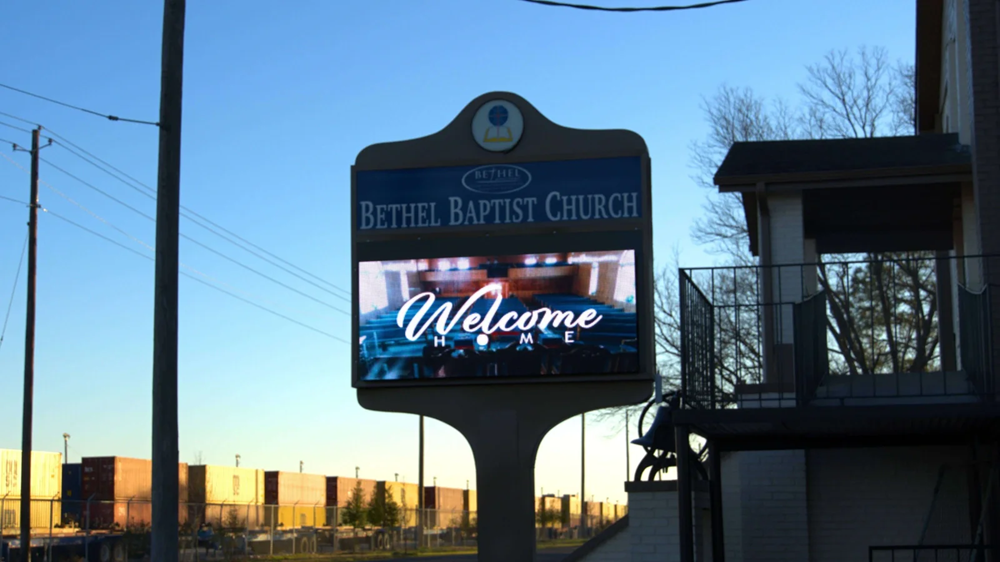
Over the years, event signage technology has undergone a dramatic transformation. It is said that at some of the earliest known events, organizers had to carve a brand-new stone tablet reading: “Lecture on Saber-Toothed Tigers now held in Cave 3.” Jokes aside, cave paintings and stone tablets were gradually replaced by hand-painted signs and printed posters, followed later by backlit displays and projectors.
The emergence of LED technology completely changed the rules of the game. It significantly improved brightness, viewing angles, and energy efficiency, while also enabling outdoor applications. Today, LED digital signage integrates touchscreens, wayfinding systems, augmented reality, and cloud-based content management systems, enabling synchronized real-time updates across multiple displays—even if you are not anywhere near Cave 3.
This technological evolution has transformed event signage from a simple information tool into a dynamic, interactive platform that not only enhances attendee experience but also provides valuable data for organizers. First, consider whether you have in-house design capabilities or need to outsource content creation. You should also factor in the cost of content management software and the training required for staff to use these systems effectively.
While the initial investment may be higher than traditional signage in terms of cost and setup time, the long-term ROI of LED digital signage is substantial:
- Eliminates printing costs for multiple signs or repeated events
- Reduces labor costs for installing and replacing physical signage
- Lowers environmental impact by reducing single-use printed materials
- Creates revenue opportunities by selling ad space to sponsors
- Increases attendee engagement, improving overall event effectiveness
For recurring events, the investment becomes even more attractive since the hardware can be reused while only the content needs updating. Many organizers find that LED displays pay for themselves within a few event cycles, especially when sponsorship opportunities are considered.
Practical Applications of LED Signage
LED signage comes in many forms, offering maximum flexibility:
- Digital billboards: Large outdoor displays commonly seen in public spaces
- Indoor displays: Used in retail environments, corporate venues, and event spaces
- Video walls: Seamless large-scale displays composed of multiple LED panels
- Flexible LED screens: Curved displays that can conform to irregular surfaces
- Transparent LED displays: See-through screens that allow visibility through the display
This adaptability ensures that regardless of venue constraints or event requirements, digital signage solutions can be properly customized. From small meeting room displays to massive convention center LED walls, the technology scales effectively.
LED digital signage also improves navigation and attendee experience at events and other venues. Interactive wayfinding displays help visitors locate exhibitors, conference rooms, or facilities. Clear and bright directional information reduces confusion and frustration, especially in large venues.
Environmental Impact of Digital Signage
As events increasingly prioritize sustainability, LED displays offer several environmental advantages:
Energy Efficiency
LED signage consumes significantly less power than traditional lighting technologies such as neon, fluorescent, or incandescent lighting. Modern LED digital signage uses approximately 50–90% less energy than equivalent traditional illuminated signs, reducing electricity consumption and carbon emissions.
Long Lifespan, Reduced Waste
LED components typically last 5–10 years of continuous operation, far exceeding traditional lighting technologies. This longer lifespan results in fewer replacements and less material waste.
Absence of Hazardous Materials
Unlike fluorescent or neon lighting, which may contain mercury or other toxic gases, LED signage does not rely on hazardous substances. This makes LED displays safer during operation and reduces environmental risk at end-of-life disposal.
Reduced Printing Waste
Digital LED signage eliminates the need for printed materials, avoiding the production, transportation, installation, and disposal of paper, vinyl, and plastic signage.
Many event organizers highlight these sustainability benefits in their marketing to demonstrate commitment to reducing environmental impact while improving communication efficiency.
As the event industry continues to evolve, LED digital signage is leading a communication revolution. The shift from stone tablets and printed materials to dynamic, interactive displays represents not just technological progress, but a fundamental change in how we communicate with attendees.
While the initial investment requires careful consideration, the advantages of LED signage—enhanced visual impact, real-time flexibility, measurable engagement, and environmental benefits—make it a compelling option. For event organizers aiming to elevate attendee experience and streamline operations, LED signage is not just a current solution, but a forward-looking investment.
In an increasingly competitive events market, effective communication, rapid adaptability, and attention capture are critical differentiators. LED digital signage excels in all these areas, making it a strong choice for any venue seeking to maximize impact and attendee satisfaction. Whether managing a small corporate gathering or a large-scale conference, the versatility and power of LED signage provide tools that transform not only how information is displayed, but how events are experienced.
What is LED Signage?
The core of an LED display consists of numerous small light-emitting diodes (LEDs) arranged into panels or modules. Each LED acts like a tiny light bulb that emits colored light. Modern LED displays use RGB (red, green, blue) diodes, and by adjusting the intensity of each primary color, millions of color variations can be produced.
LED digital signage has transformed how information is displayed and communicated at events of all types. From conferences and trade shows to sports events and concerts, LED displays offer numerous advantages over traditional signage methods.
To learn more about LED digital signage, watch our webinar “LED 101: Practical Tips for Getting Started with Digital Signage” to see whether it is right for your business or organization.
Advantages of LED Signage
Key advantages of LED technology include exceptional brightness (clearly visible even in direct sunlight), energy efficiency (significantly lower power consumption than traditional technologies), long lifespan (typically 50,000–100,000 hours), and durability in various weather conditions.
LED displays capture attention instantly with vivid imagery that remains visible even in well-lit environments. High contrast and color saturation make content stand out and naturally draw the viewer’s eye. Unlike printed materials, LED screens can incorporate motion, animation, and video elements, making them far more engaging than static displays.
In addition to visual benefits, LED signage saves event planners significant time by eliminating logistical burdens. Digital signage is typically controlled through specialized software, allowing remote content scheduling, updates, and system integration without on-site intervention. Event organizers can update information instantly, avoiding delays and costs associated with reprinting physical signage. This capability is especially valuable for:
- Schedule changes and time-sensitive announcements
- Emergency notices and directional updates
- Countdown timers for keynote sessions or special events
- Real-time social media integration and audience interaction
- Rotating sponsor messages throughout the day
Digital displays make last-minute changes easy to manage rather than disruptive. For multi-day events, content can be updated each morning to reflect the day’s schedule.
LED signage often includes analytics capabilities that provide valuable insights, such as:
- Dwell time in front of specific content
- Engagement levels with interactive elements
- Foot traffic patterns and hotspot areas within venues
- Effectiveness of different content types or messages
These data points help event organizers optimize communication strategies in real time and improve future events based on objective metrics rather than assumptions.
Interactive LED signage can also enhance engagement through QR codes, social media integration, live polling, and audience participation features. These capabilities help build community among attendees while providing valuable data for organizers and sponsors.
Considerations Before Switching to LED Displays
It is important to note that LED display screen require a higher upfront investment compared to traditional signage. Costs include not only the display hardware but also installation infrastructure, content management systems, and, in the case of permanent installations, setup fees. A comprehensive budget should account for all these factors as well as ongoing maintenance costs.
Transitioning to digital displays also requires a strategy for creating, scheduling, and updating digital content.
Post time: Jun-04-2026